
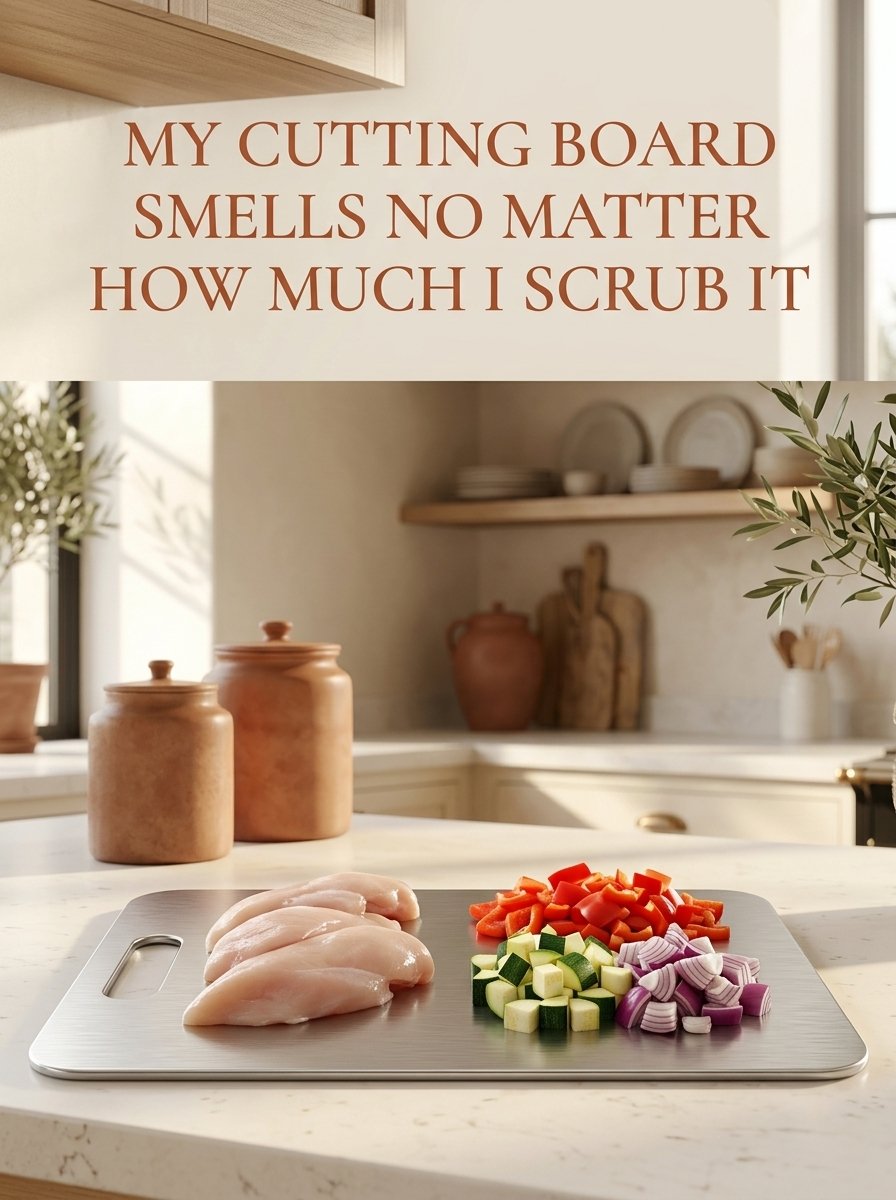
My Cutting Board Smells No Matter How Much I Scrub It
Kitchen Essentials
As an Amazon Associate I earn from qualifying purchases.
The problem
You scrub it, you soap it, maybe you even hit it with baking soda and lemon — and an hour later it still smells like last night’s onions, or worse, you’re second-guessing whether raw chicken juice ever really came out before you cut tomorrow’s salad on the same spot.
Why it happens
Wood and plastic boards are porous, and every time a knife touches them, it cuts tiny grooves into the surface. Odor molecules and bacteria get trapped in those grooves — not on the surface where scrubbing reaches, but down inside them. Wash it a hundred times and some of it just isn’t coming out. It’s also why a board that’s fine for chopping herbs can quietly become a real cross-contamination risk once it’s been used for raw meat a few dozen times.
The fix
- Keep your good wood or plastic board for everyday chopping — it’s genuinely better for your knives, since hard surfaces dull blades faster.
- For raw meat, fish, or anything you want to just rinse and be done with, switch to a non-porous surface that can’t trap anything and can go straight in the dishwasher.
- Treat it as your “raw meat and mess” board, not your primary everyday cutting surface, and you get the hygiene benefit without the knife-edge tradeoff.
What helps
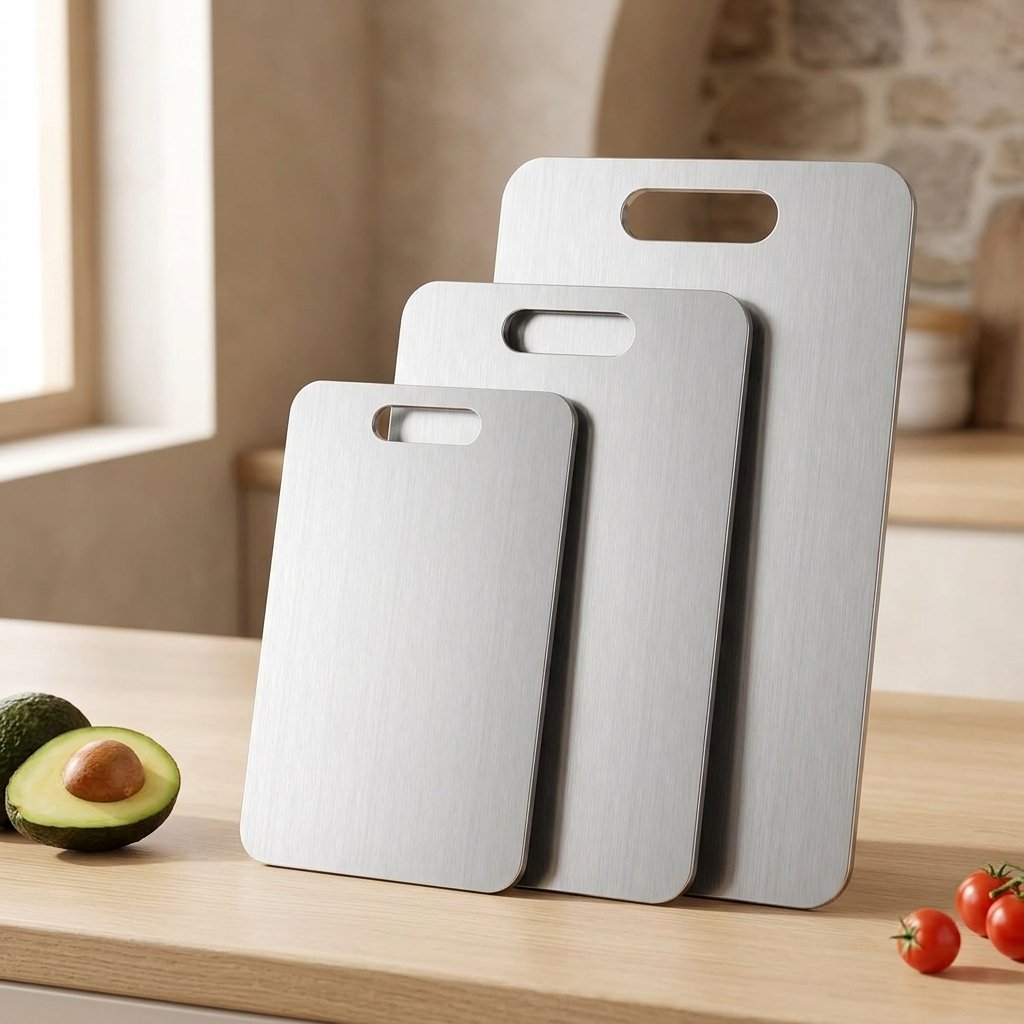
Titanium Cutting Board Set of 3
Dishwasher-safe, non-porous, won’t hold onto smells or bacteria the way wood does. One honest caveat: metal is harder than wood or plastic, so it will dull your knives faster with heavy daily use — best kept as your raw-meat board, not your everyday one.