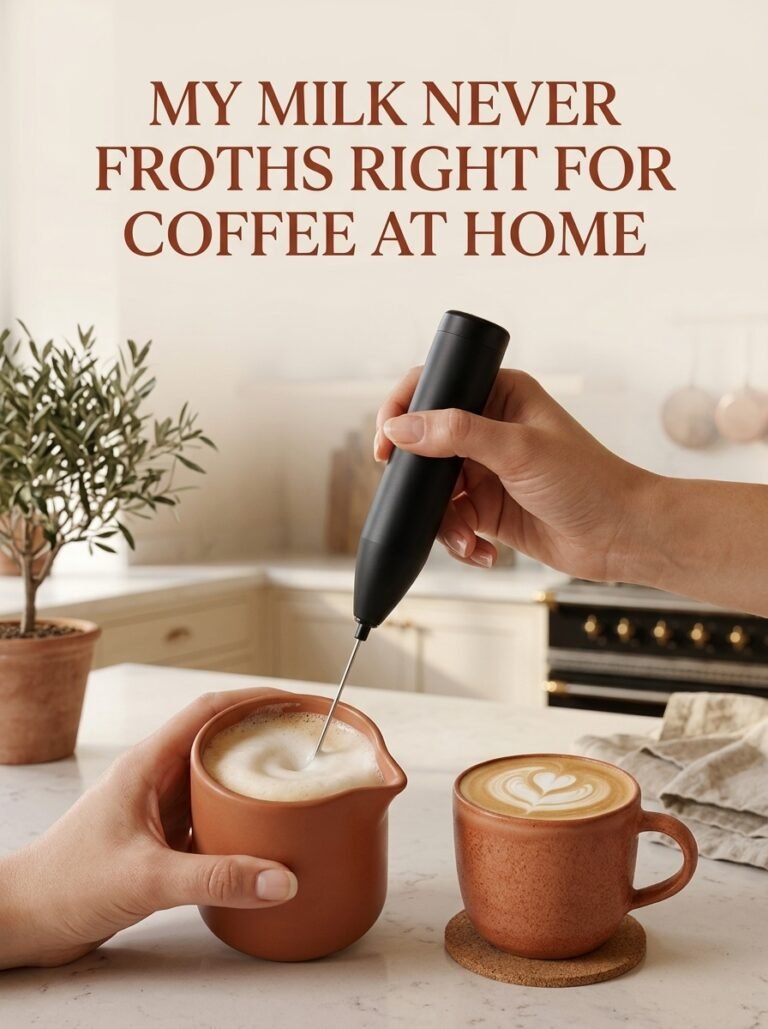

Why Coffee Never Tastes the Same at Home
Coffee & Tea
As an Amazon Associate I earn from qualifying purchases.
You bought the same beans the coffee shop uses. You’ve got a decent machine. You follow the bag’s instructions. And it still tastes… off. Bitter one morning, watery and sour the next, and you can never quite figure out what you did differently.
Here’s the part almost nobody tells you: the machine is rarely the problem. Grind size and water temperature are. Get those two things right and the same beans taste like a completely different cup.
Think of Coffee Like Steeping Tea, Not Boiling Pasta
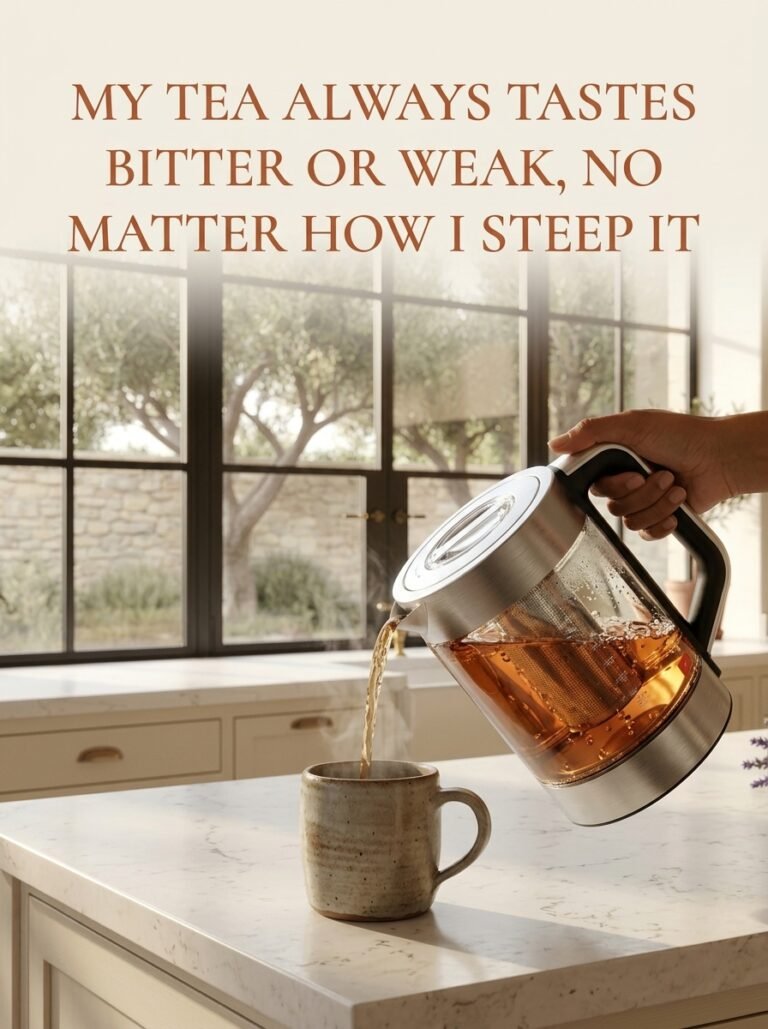
When you steep tea too long, or with water that’s too hot, it turns bitter and harsh. Steep it too briefly, or with water that’s too cool, and it tastes weak and flat.
Coffee works the exact same way, it’s called extraction, it’s just less obvious because the grounds are hidden inside a filter or a machine instead of floating loose in a cup where you can watch them.
Grind size controls how fast water can pull flavor out of the coffee. Water temperature controls how aggressively it pulls. Get either one wrong and you either over-extract (bitter, harsh, burnt-tasting) or under-extract (weak, sour, thin).
Why Grind Size Changes Everything
A fine grind exposes way more surface area to the water, so flavor comes out fast, sometimes too fast. A coarse grind exposes less surface area, so water needs more time in contact with it to pull out the same flavor.
That’s why the same beans, ground the wrong way for your brew method, taste completely different:
- Espresso needs a very fine grind, because the water only touches it for seconds
- Pour-over and drip want a medium grind, matched to a few minutes of contact time
- French press needs a coarse grind, since the grounds sit steeping for several minutes
Use a fine, espresso-style grind in a French press and you’ll get an over-extracted, bitter, muddy cup. Use a coarse grind in an espresso machine and you’ll get weak, sour shots. Same beans. Completely different result.
Why Water Temperature Matters Just as Much
Most people either pour water straight off a rolling boil, or let it cool down way more than they realize. Both throw off the cup.
Water that’s too hot (a full, aggressive boil) scalds the grounds and pulls out bitter, burnt-tasting compounds along with the good flavor. Water that’s too cool under-extracts, leaving the cup sour and thin, because it never had the energy to pull out the flavor that was actually there.
The sweet spot most specialty coffee is brewed at sits a little below boiling, roughly 195–205°F, not a full rolling boil, and not lukewarm.
The Habit That Actually Fixes It
This is where a lot of guessing happens, because most kettles only have one setting: boil. You pour it off the second it clicks, or you let it sit and hope it’s cooled enough, and either way, you’re guessing.
- Match your grind size to your actual brew method, not just “medium” by default
- Let boiling water rest about 30 seconds before pouring, or use a kettle with real temperature control
- Keep your coffee-to-water ratio consistent, roughly 1 part coffee to 16 parts water, instead of eyeballing it each time
Once grind size and water temperature are actually dialed in instead of guessed at, the same bag of beans you’ve had all along starts tasting like a completely different cup.
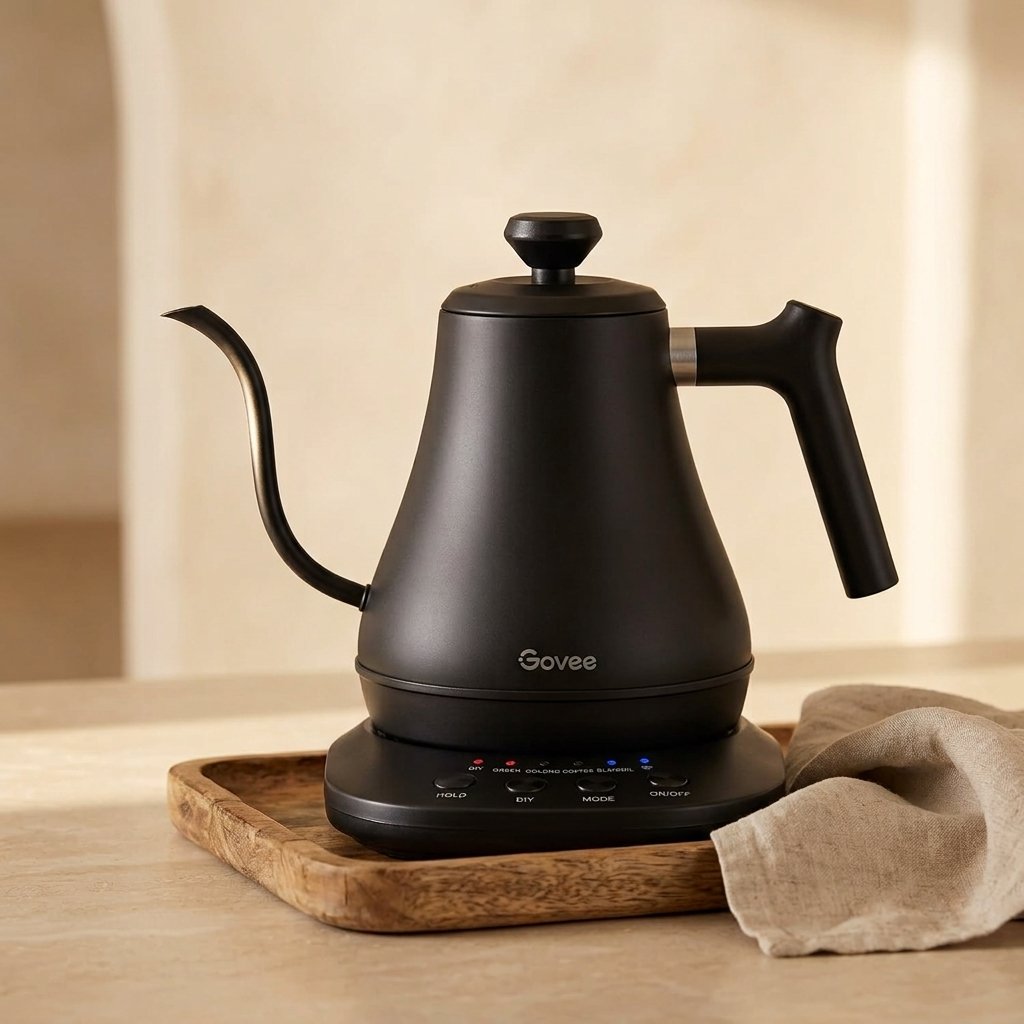
Govee Gooseneck Kettle
Real temperature presets so you’re never guessing between scalding and lukewarm.
The Bottom Line
Bad coffee at home almost never means you need a better machine. It means the water was too hot or too cold, and the grind didn’t match the way you were brewing it.
Fix those two variables and the coffee shop cup starts happening in your own kitchen.