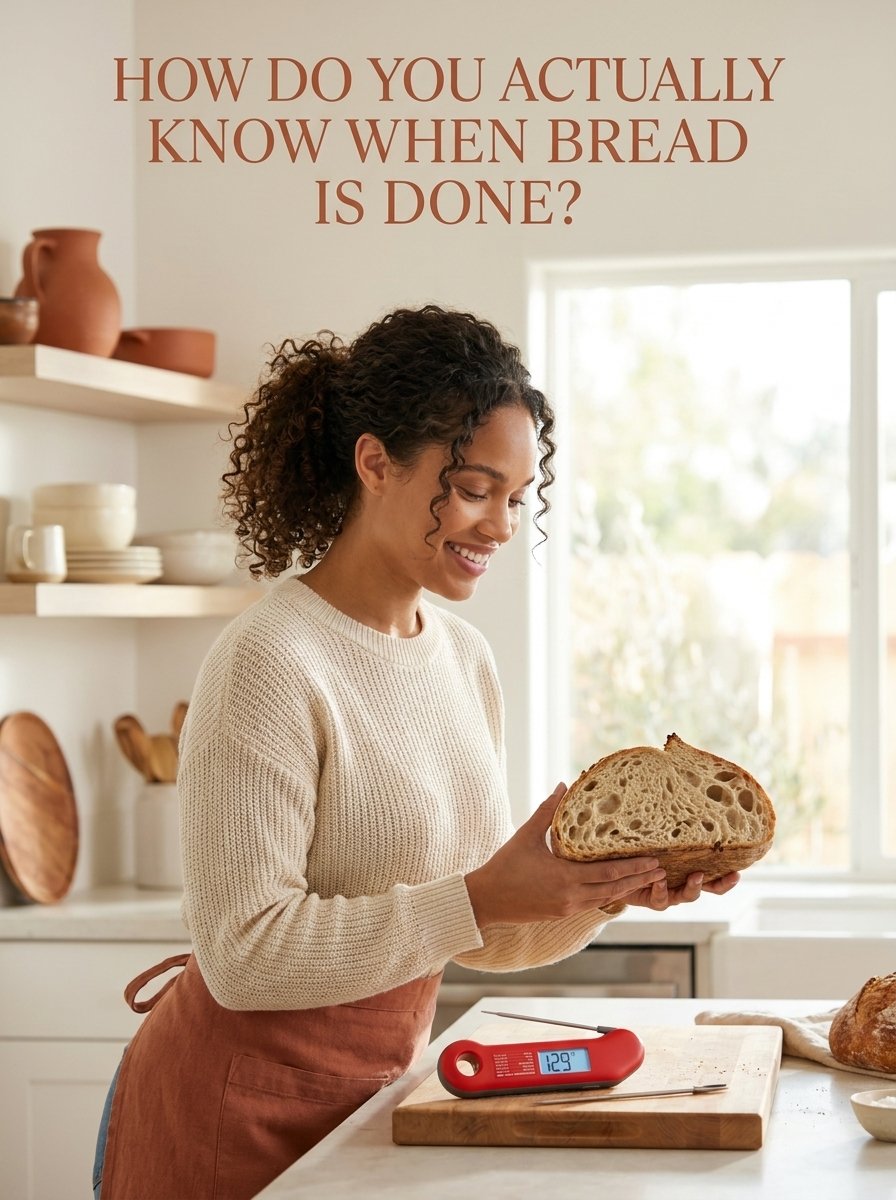
How Do You Actually Know When Bread Is Done?
Baking
As an Amazon Associate I earn from qualifying purchases.
You pull your bread out of the oven. It looks golden. It smells amazing. You tap the bottom and it sounds… hollow? Maybe? Kind of?
And now you’re standing in your kitchen, oven mitt still on, tapping a loaf of bread like it’s going to answer you back.
Here’s the truth: looking at bread can’t tell you if it’s done. But a thermometer can. Let’s talk about why.
Why Your Eyes Are Lying to You
Think about a marshmallow held over a campfire. The outside turns golden brown in about 10 seconds. But if you bit into it right then, the inside would still be cold and barely melted.
Bread does the exact same thing.
The outside of your loaf browns because it’s touching hot oven air directly. That happens fast. But the inside of the bread, the doughy middle where all the important stuff happens, heats up much more slowly. So a loaf can look perfectly baked on the outside and still be raw, gummy dough in the center.
Color is just skin deep. It’s not proof of anything happening underneath.
What’s Actually Happening Inside Your Bread
Here’s the science part, kept simple.
Bread dough starts as a sticky, wet, floppy blob of flour, water, and yeast. For that blob to turn into actual bread, with air pockets, a soft chewy inside, and a sturdy structure, a few specific things have to happen:
- The starches in the flour need to firm up (this is called gelatinization)
- The proteins need to set, which is what gives bread its structure
- Extra moisture needs to cook off
And here’s the key part: all of that only happens at specific internal temperatures. Not “when it looks brown.” Not “after 35 minutes.” At an actual number, measured with an actual thermometer, inside the actual bread.
If the inside of your loaf doesn’t hit that number, none of that finishes happening, no matter how golden the crust gets.
So What Temperature Are We Looking For?
This is where most people get stuck, because bread isn’t one single number. It depends what you’re baking:
- Soft sandwich breads / white bread: around 190°F (88°C)
- Rustic, crusty breads like sourdough or French loaves: around 205–210°F (96–99°C)
- Enriched breads (brioche, milk bread, anything with butter or eggs): around 190°F (88°C)
That’s a real range, and it’s exactly why guessing doesn’t work. A “done” temperature for a soft dinner roll would seriously underbake a crusty sourdough boule.
Why the Toothpick/Tap Test Isn’t Enough
You’ve probably heard all of these: tap the bottom and listen for hollow, poke it and see if it springs back, stick a toothpick in and check for crumbs.
These aren’t useless, they’re just not precise. A hollow-sounding tap can happen a good 10–15 minutes before the inside is actually fully baked. It’s a decent hint. It’s a terrible final answer.
It’s like checking if a pool is warm enough to swim in by just looking at it. You need to actually put something in the water to know for sure.
This Is Exactly Why a Thermometer Changes Everything
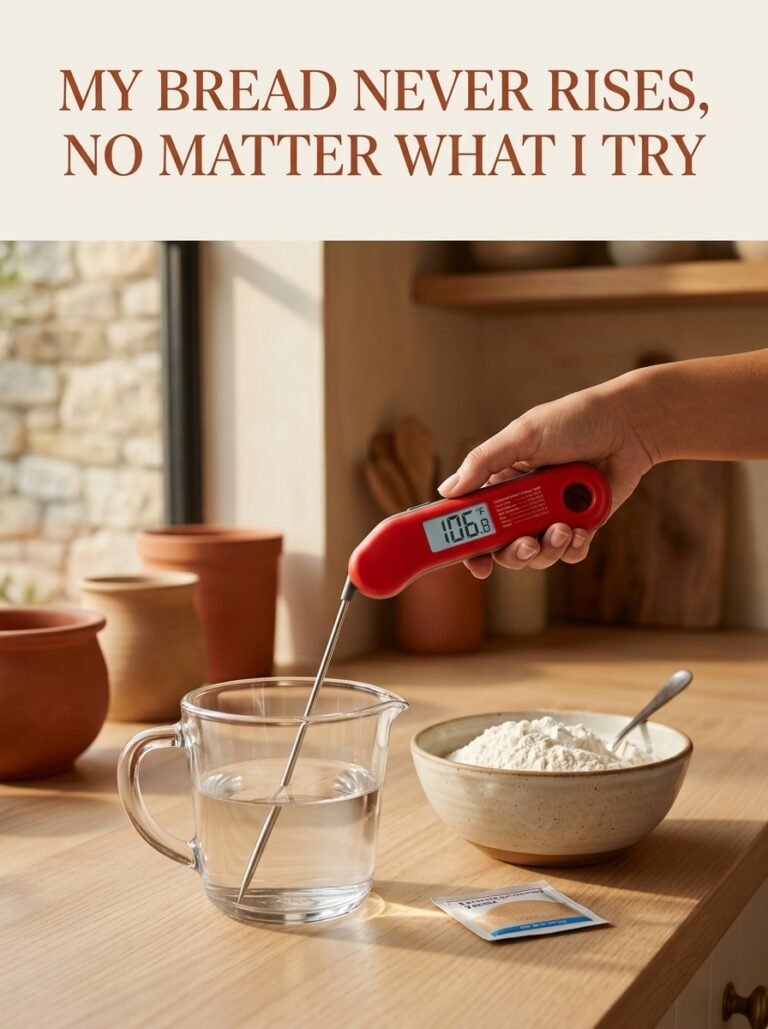
Instead of tapping, poking, and hoping, you just slide a thermometer probe into the center of the loaf, wait a couple of seconds, and read the exact internal temperature. Then compare it to the number for the bread you’re making.
No guessing. No cutting into a loaf too early and watching steam pour out. No dry, overbaked bricks either, because you pulled it 10 minutes too late “just to be safe.”
You just know.
That’s really the whole trick to consistently good bread: it’s not about better instincts. It’s about better information.
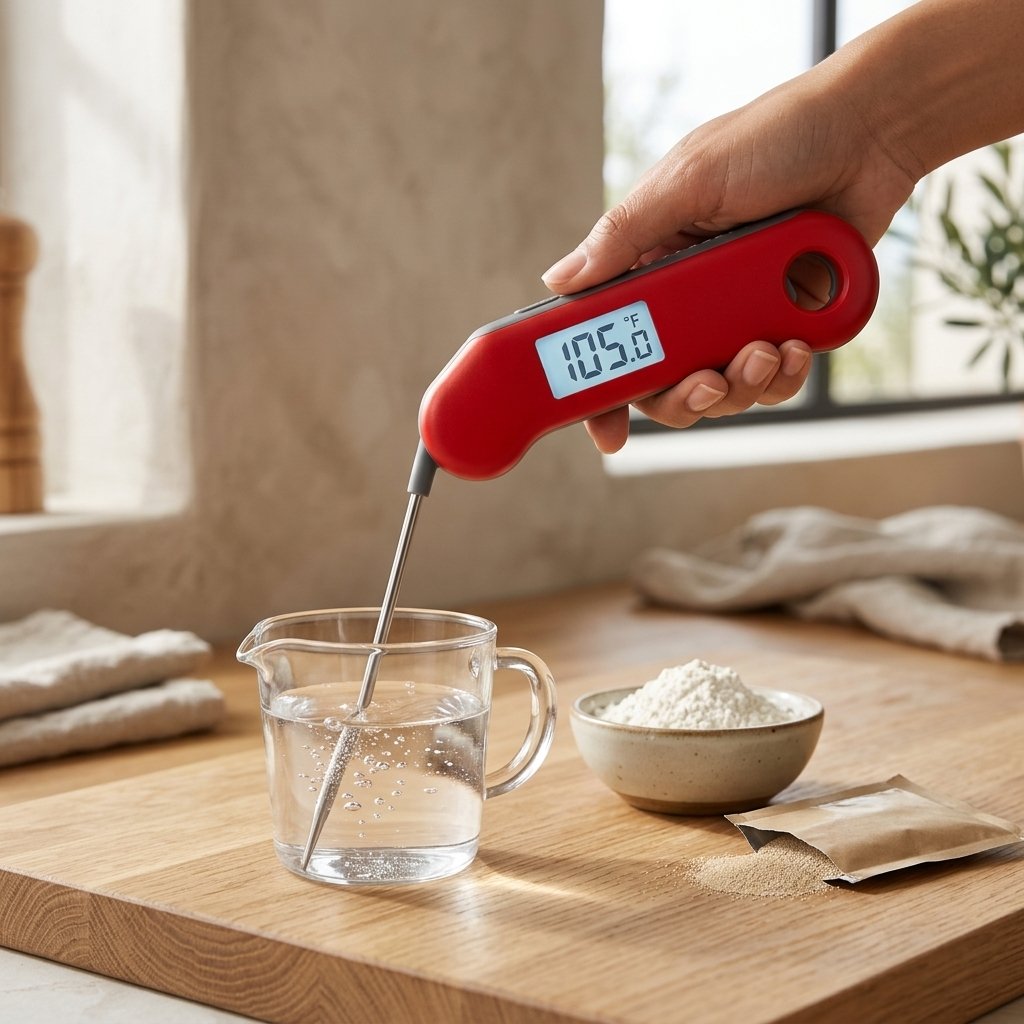
ThermoMaven Thermometer
Instant-read, reaches the center of the loaf in seconds, no more guessing by sound or color.
The Bottom Line
Bread doesn’t tell you it’s done by looking pretty. It tells you by reaching the right internal temperature, and the only way to know that number is to actually measure it.
Slide a thermometer into the center of your next loaf, and stop guessing for good.