

Why Your Butter Is Always Too Hard to Spread
Baking
As an Amazon Associate I earn from qualifying purchases.
You pull the butter dish out of the fridge, press a knife into it, and the bread rips before the butter even moves. So you either microwave it for a few risky seconds or give up and eat dry toast.
The problem isn’t your butter. It’s that refrigerator temperature and “spreadable” temperature are two very different things.
Why Cold Storage Fights Spreadability
Butter is solid fat, and solid fat firms up the colder it gets. A refrigerator sits around 37°F specifically to keep dairy safe — but butter doesn’t actually need that level of cold to stay fresh. It just gets stored there by default because that’s where the rest of the dairy lives.
Left out on a counter in open air, butter also picks up odors and softens unevenly, which is exactly why most people don’t just leave the whole stick out. The real issue isn’t refrigeration itself — it’s not having a way to keep butter both cool and soft at the same time.
The Fix
- Store butter in a water-seal crock instead of directly in the fridge or a bare dish on the counter.
- Pack the butter into the crock’s cup and submerge it in cool water in the base — the water seal keeps air out, which keeps it fresh without refrigeration.
- Keep the crock somewhere out of direct sun, and change the water every few days.
- Only refrigerate it directly again if your kitchen regularly runs hot enough that the water seal can’t keep it fresh.
The water-seal method isn’t a compromise between fresh and spreadable — it’s genuinely how French kitchens have kept butter both for a very long time.
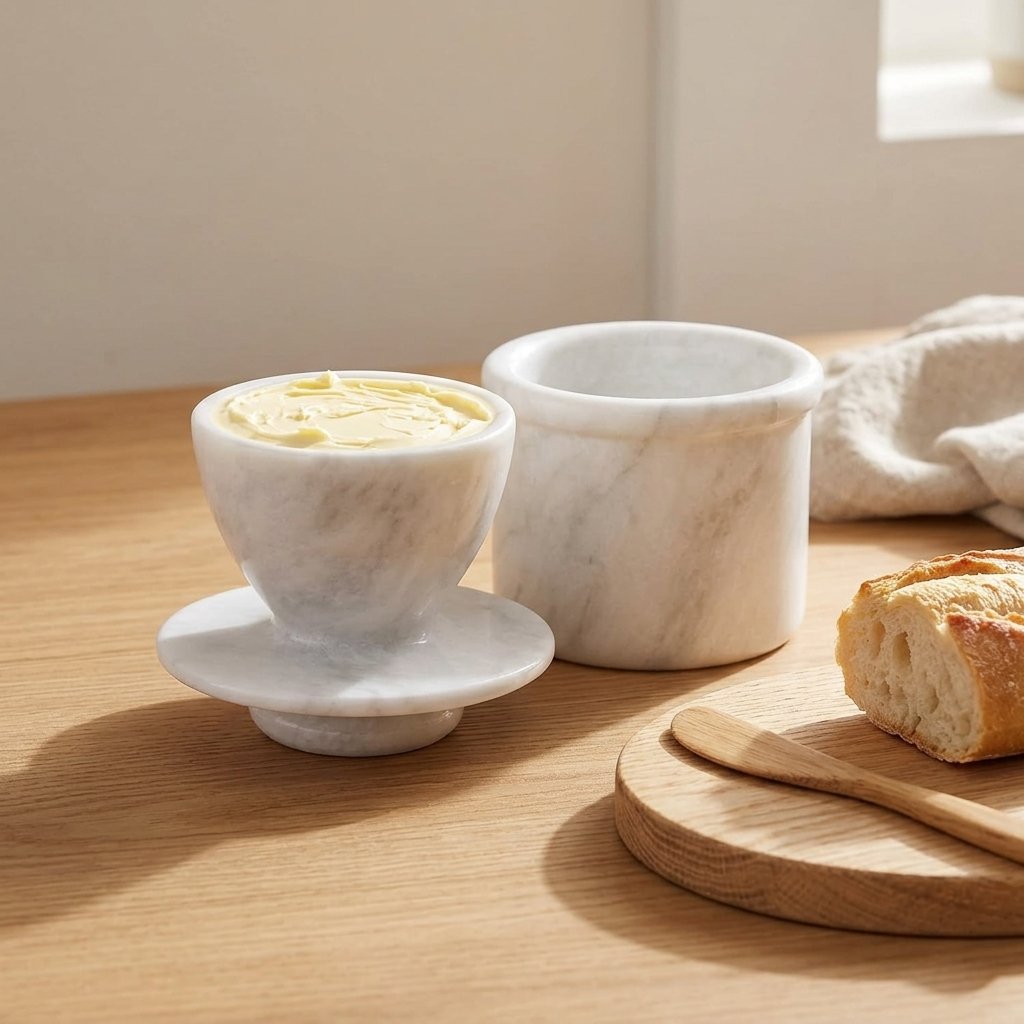
Radicaln Marble Butter Keeper
A French-style water-seal crock that keeps butter spreadable at room temperature without leaving it exposed to air or going rancid.
The Bottom Line
Hard butter isn’t a texture you have to plan around every morning. Keep it in the right vessel and it stays exactly as spreadable as you need it, no microwave gamble required.