

Why Your Knives Go Dull So Fast
Kitchen Essentials
As an Amazon Associate I earn from qualifying purchases.
You bought a good knife, it was sharp for about two weeks, and now it’s back to squashing tomatoes instead of slicing them. It feels like the knife itself is the problem, or like you’re somehow using it wrong.
Every knife dulls this fast. The difference is that most people never touch it up between the rare full sharpenings, so it just gets worse and worse until it feels unusable.
Why Dulling Happens Faster Than You’d Think
A blade edge is microscopically thin, and every single cut — even through soft food — bends that edge slightly out of alignment, the same way repeatedly bending a paperclip back and forth eventually deforms it. Cutting on hard surfaces (glass, stone, bare countertop) or running it through a dishwasher speeds this up further, but even normal, careful daily use dulls an edge within weeks.
Most people only sharpen a knife once it’s already noticeably dull, and by then the edge isn’t just misaligned, it’s actually worn down — a much bigger fix than realigning it would have been early on.
The Fix
- Hone (realign) the blade regularly — ideally every few uses — rather than waiting for it to feel dull.
- Always cut on wood or plastic boards, never glass, stone, or bare countertop.
- Hand wash knives instead of running them through the dishwasher, which knocks the edge against other items.
- Do a full sharpening a few times a year, on top of regular honing, rather than relying on honing alone forever.
A quick roll of a sharpener between uses takes seconds and keeps the edge from ever reaching the point where it needs a real fix.
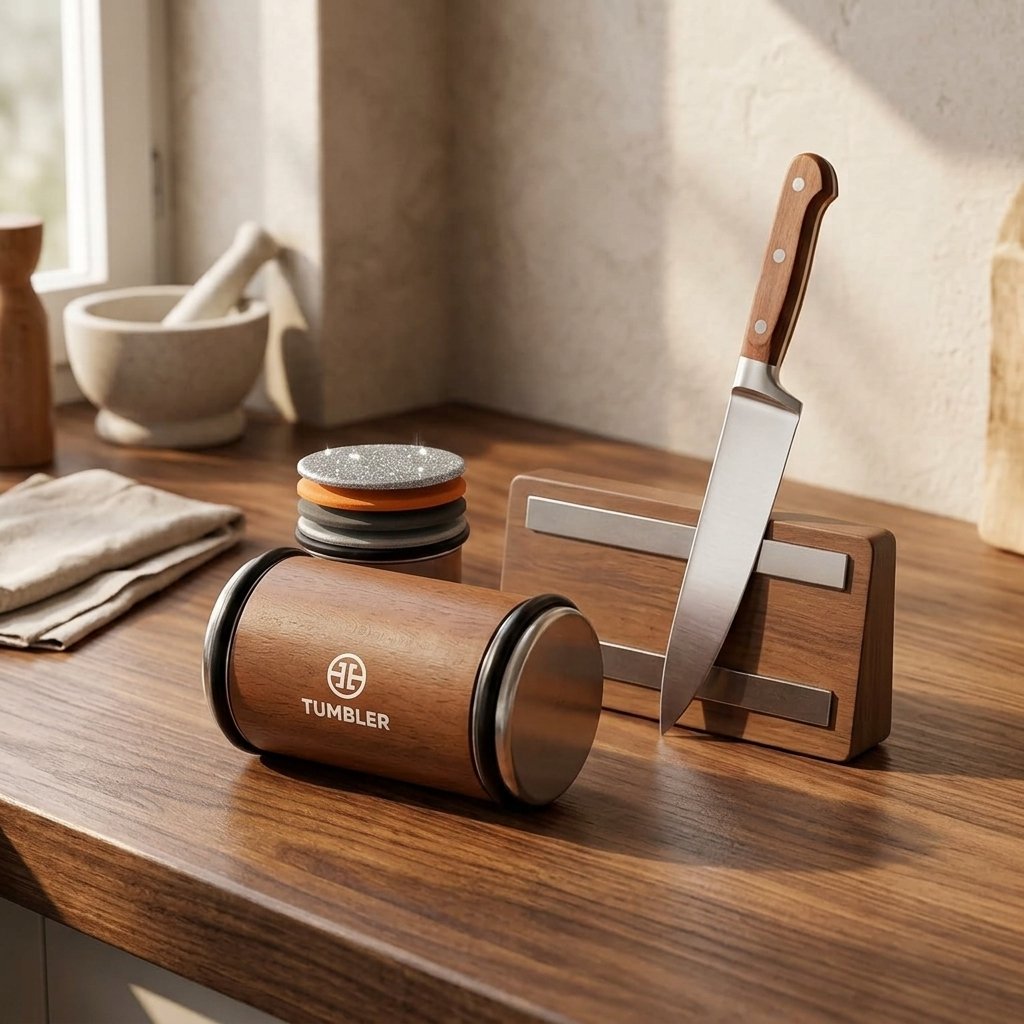
The Original Tumbler Rolling Knife Sharpener
A small rolling sharpener that realigns a blade’s edge in a few passes, built for quick touch-ups between full sharpenings.
The Bottom Line
A knife going dull isn’t a flaw in the knife. It’s just what every edge does with use. Touch it up regularly instead of waiting for it to fail, and it stays sharp far longer.