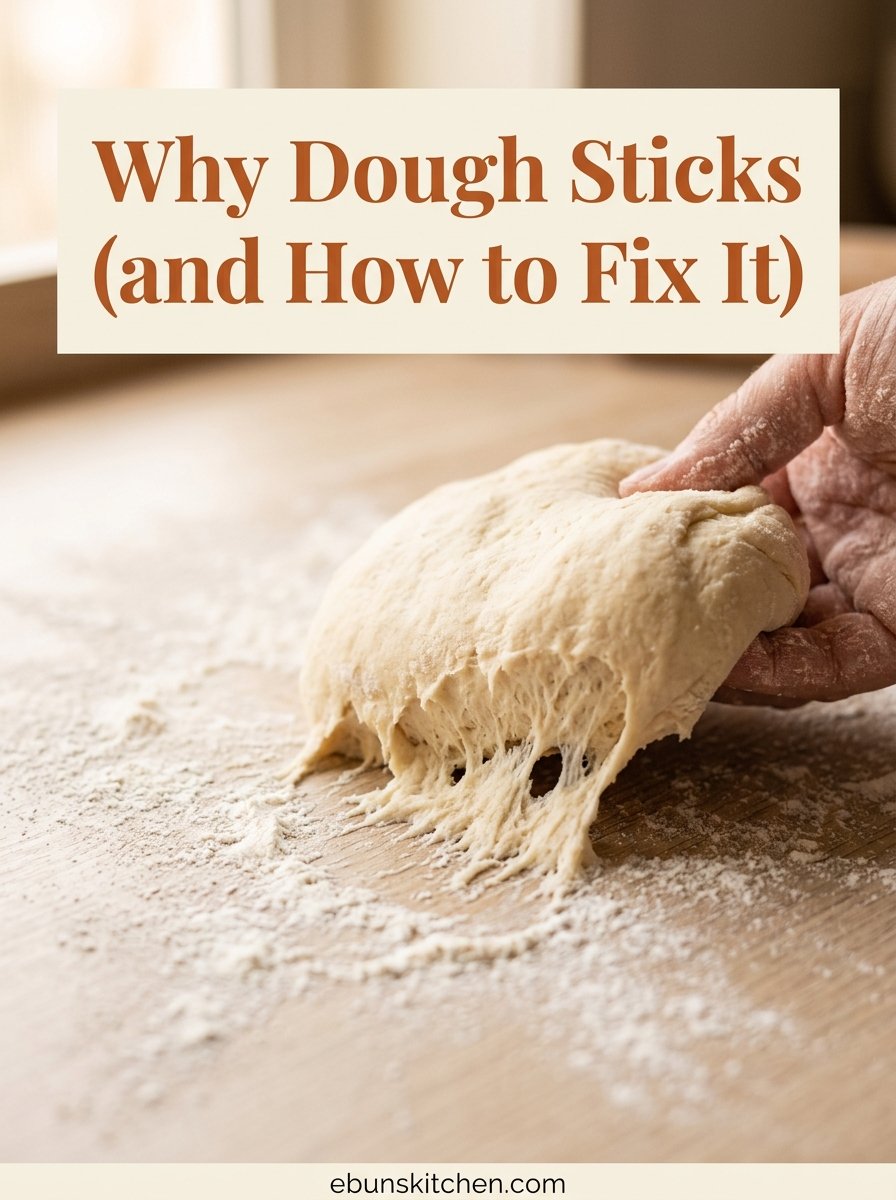
Why Dough Sticks (and How to Fix It)
Baking
As an Amazon Associate I earn from qualifying purchases.
The problem
You roll out your dough, and within a minute it’s fused itself to the counter. You add more flour. It helps for about thirty seconds, then sticks again — and now the dough’s dry and tough instead of tender.
Why it happens
Sticking almost always comes down to one of three things: the dough is too warm (butter or fat has started to soften and get tacky), there’s not enough resting time for the gluten to relax, or the rolling surface itself is the wrong texture for the job. Adding more flour treats the symptom, not the cause — and over-flouring is exactly what makes crusts tough.
The fix
- Chill the dough for at least 20–30 minutes before rolling — cold fat holds its structure instead of smearing.
- Roll between two sheets of parchment paper instead of flouring the counter — zero stick, zero extra flour.
- Use a light dusting of flour only on the dough itself, not the surface, and only if you’re not using parchment.
- Work quickly — the longer dough sits at room temperature under your hands, the warmer and stickier it gets.
What helps
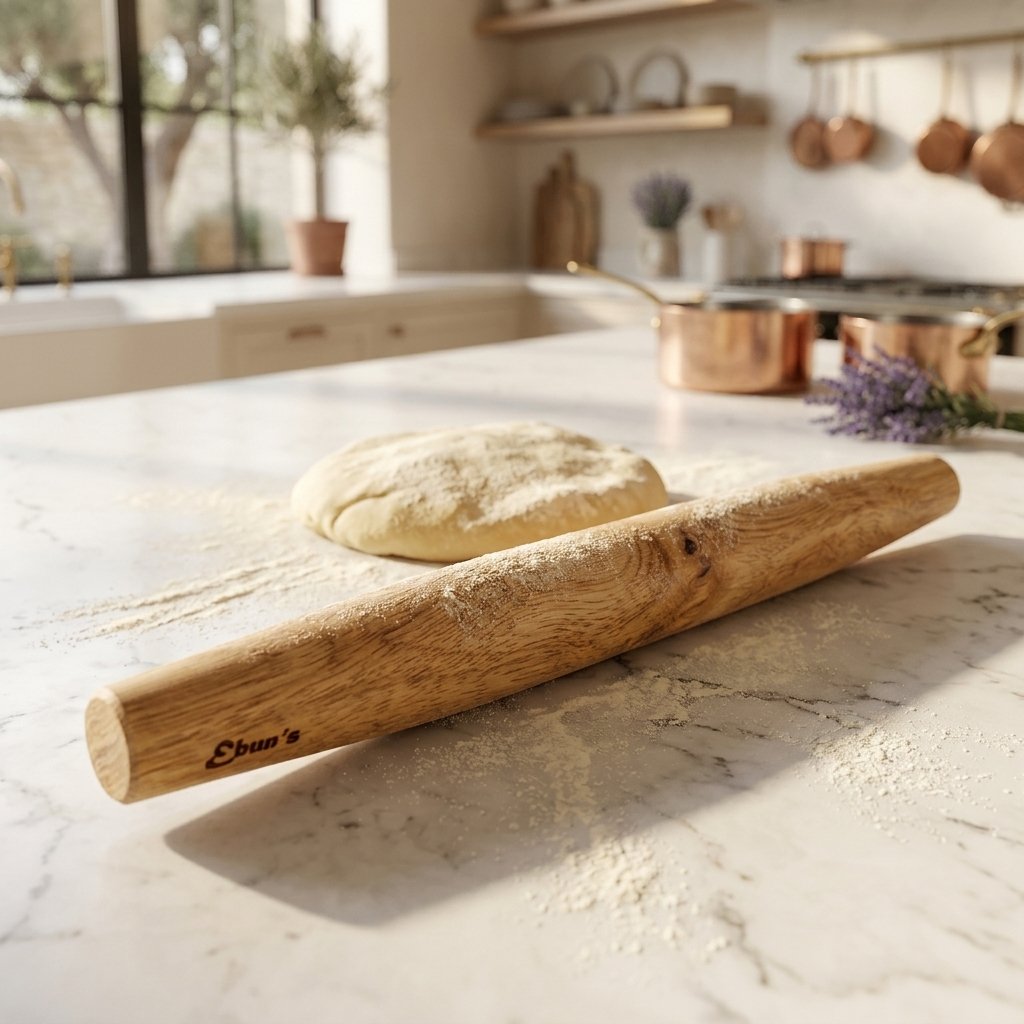
French Rolling Pin
No handles means more even pressure and better feedback on how the dough’s moving.
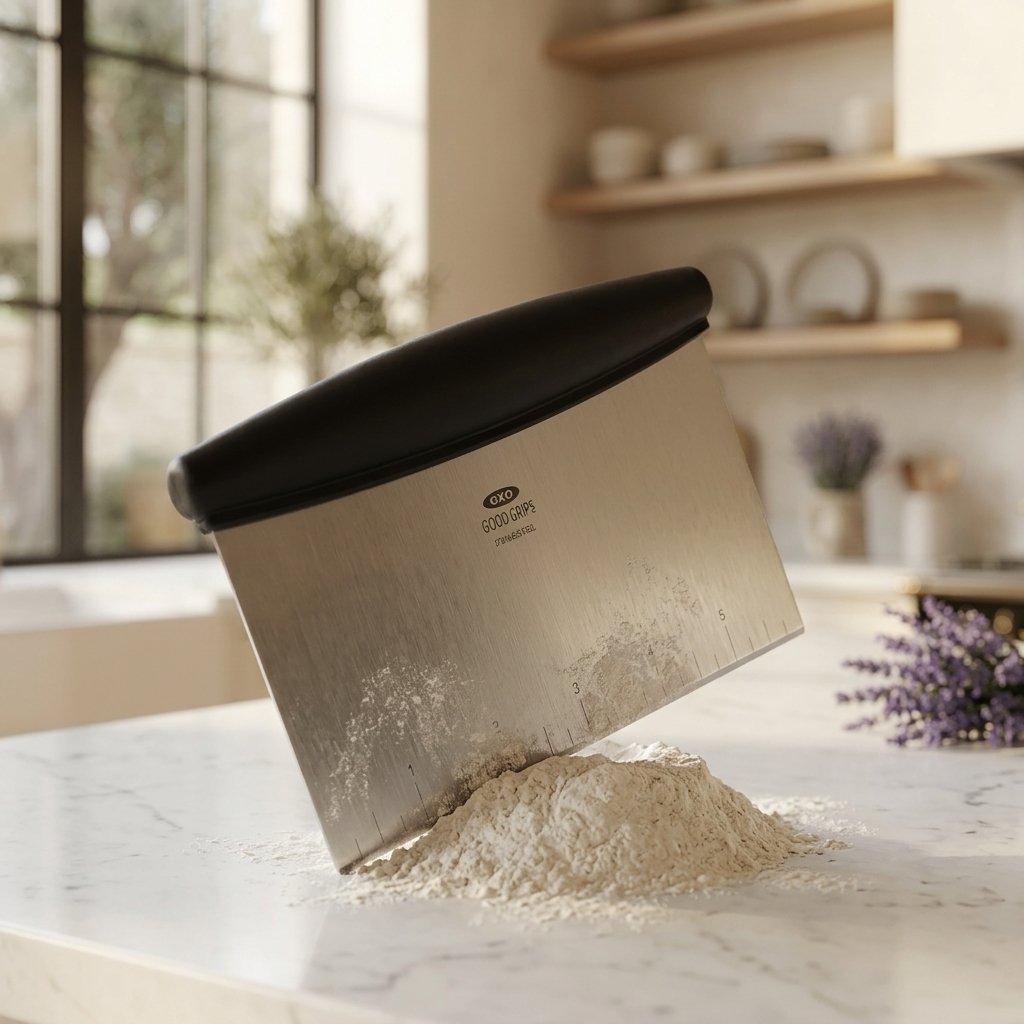
OXO Bench Scraper
Cleanly lifts dough off the counter without tearing it.
Related problems
- Why Your Pie Crust Cracks (coming soon)
- Getting Bread to Actually Rise (coming soon)