Why Your Pie Crust Always Shrinks or Cracks
Baking
As an Amazon Associate I earn from qualifying purchases.
You roll out a beautiful crust, ease it into the pan, and blind-bake it for a tart or a cream pie. Twenty minutes later you open the oven to a crust that’s slumped down the sides, puffed into a dome, or split down the middle like it tried to escape.
You didn’t do anything wrong with the dough. The crust just had nothing holding it in place while it baked.
Why an Empty Crust Fights Back
Pastry dough is mostly fat and flour, and both of those react to heat. The butter melts and turns to steam, and that steam has to go somewhere — usually straight up, ballooning the bottom of the crust into a dome. Without any weight resting on it, the dough also has nothing stopping it from shrinking back down the sides of the pan as the gluten relaxes in the heat.
Think of it like drying wet clay without a mold underneath it — it slumps toward whatever shape gravity and heat push it into, because there’s nothing there to hold the form.
The Fix
- Dock the bottom of the crust with a fork before baking — small steam vents so it can’t balloon.
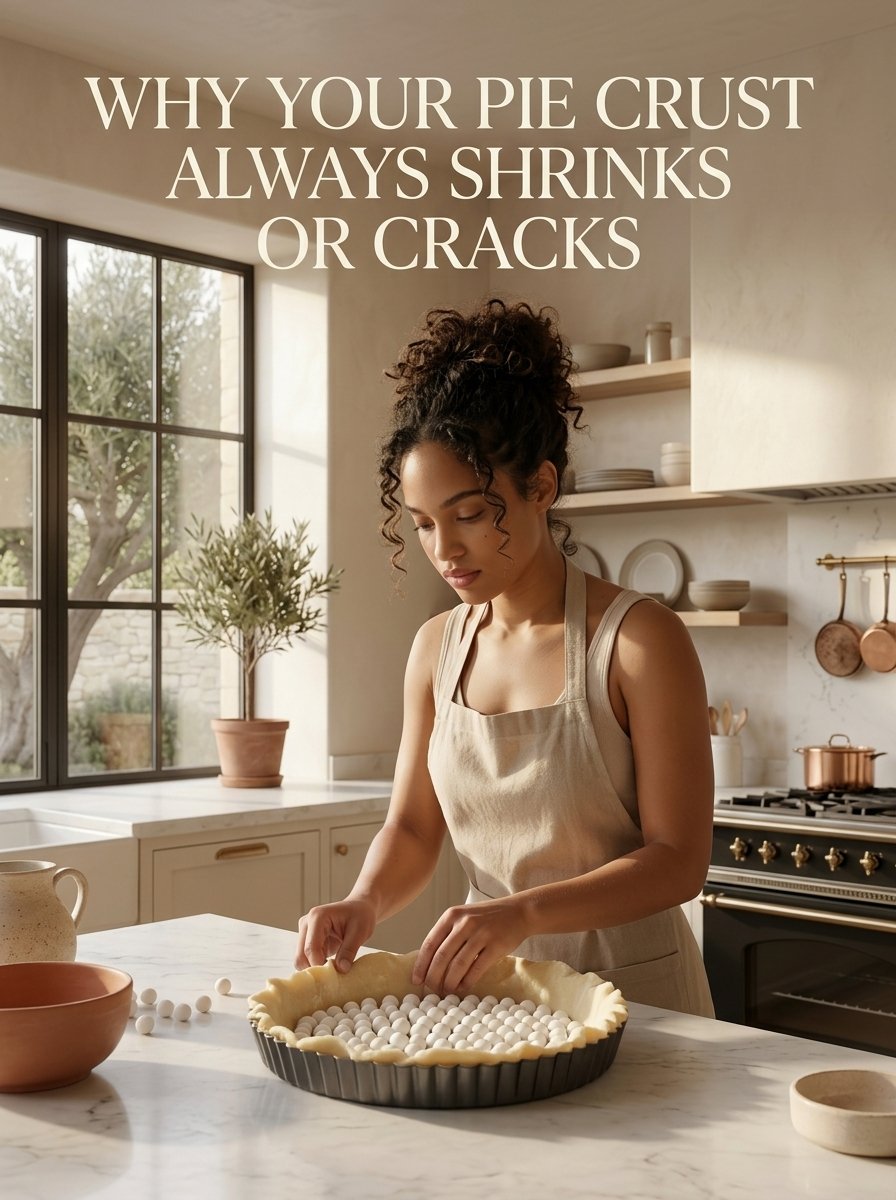
- Line it with parchment paper, pressed into the corners, not just laid flat on top.
- Fill it evenly with pie weights, all the way up the sides, not just a light scatter in the middle.
- Bake with the weights in for most of the blind-bake time, then remove weights and parchment for the last stretch so the bottom browns properly.
The weight does the job your hands can’t do once the crust is in the oven — it holds the dough exactly where you shaped it while the heat does its thing.
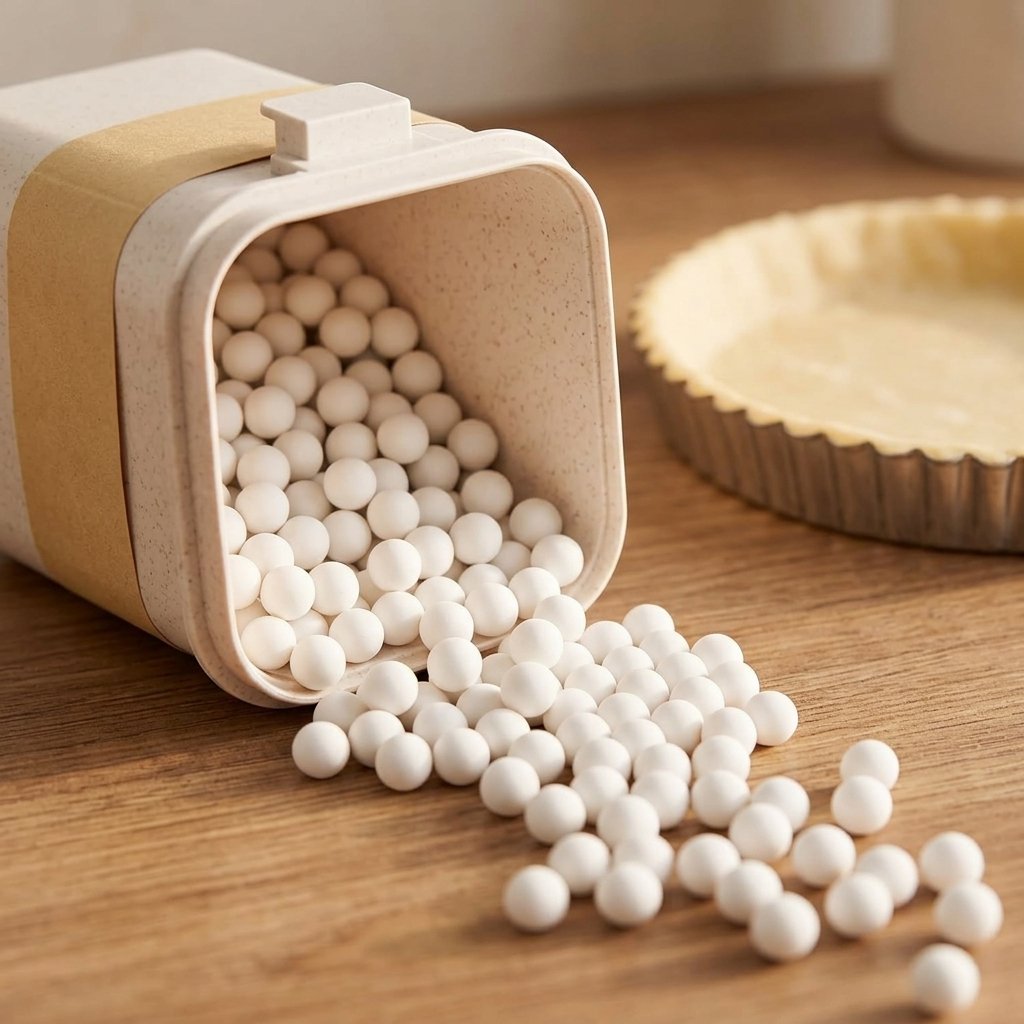
K Ceramic Pie Weights
Small, heavy ceramic beads that distribute evenly into corners a handful of dried beans never quite reaches — and they store right back in their own container.
The Bottom Line
A crust that slumps or cracks isn’t a sign you need a better recipe. It’s a crust that baked with nothing holding its shape. Weight it properly, and it holds the shape you gave it.